What Is a GPU?
GPU is short for “Graphics Processing Unit,” a dedicated processor designed to handle images and video.
GPUs are used for tasks performed on a PC such as:
- Photo and video editing
- Graphics processing for 3D games
Anytime something is displayed on a PC, a GPU is involved. Even viewing this page relies on GPU processing.
In recent years, GPUs have also been used in programs that perform parallel processing, such as artificial intelligence (AI). It may help to remember it as “hardware that displays 3D visuals beautifully and fast.”
Types of GPUs
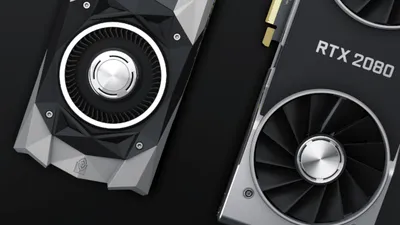
There are two main types of GPUs: an “integrated GPU (Internal GPU: iGPU)” built into the CPU, and a dedicated graphics card type called a “discrete GPU (Discreted GPU: dGPU).”
Compared with an iGPU—which is designed so that video output is possible with just the CPU and motherboard—a dGPU is a dedicated component and typically delivers higher performance.
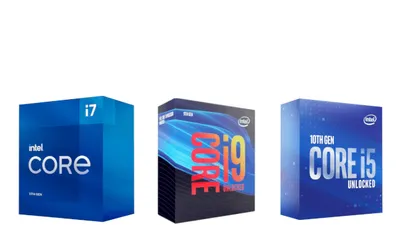
Some may think, “I don’t remember adding a GPU,” but unless it’s a gaming PC, most computers use an “integrated GPU (iGPU)” to render the display. For example, “Intel XXX Graphics” refers to an iGPU.
Meanwhile, dGPUs are optimized for workloads like 3D graphics rendering, so they are used for PC gaming, video editing software, and similar applications.
Other Uses for GPUs
In addition to display output, gaming, and image processing, GPUs are also used for AI workloads.
GPUs were not originally developed for AI, but because they can “process massive amounts of data at the same time,” they can be used for AI and deep learning, which automatically extract similarities from huge numbers of samples. As a result, GPU manufacturers have been increasingly expanding their support for the AI field.
GPUs are also used for so-called “mining,” which processes transactions for cryptocurrencies such as Bitcoin. Because mining can earn cryptocurrency rewards based on results, there was a time during mining booms when GPUs disappeared