


On a modern PC, World feels far smoother and sharper than it did at launch—and it remains a classic that’s still very playable even with budget used parts.
Since the Steam release is now several years old, a standard modern gaming PC can handle 1080p at high settings with ease. But if aiming for 4K or planning to use mods/hi-res textures, prioritize GPU performance and—especially—8GB or more of VRAM.

Verifier Comment
Changelog
UMPC, Handheld & Laptop Performance
The verdict is estimated based on hardware specifications, assuming a game resolution of 720p and settings at Medium or lower. A 'PLAYABLE' status does not guarantee actual gameplay performance.
Monster Hunter: World PC Component Selection & Build Strategy
Older CPUs can still play comfortably
- ❯Multi-core optimization has improved over time, so Core i5 / Ryzen 5–class CPUs and up are a reliable baseline, even at gaming-laptop level.
- ❯In object-heavy areas like the Ancient Forest, frame rate can become CPU-dependent—so don’t undervalue the CPU too much.
BUILD
BALANCE
Monster Hunter - Specs & Benchmarks for Other Titles
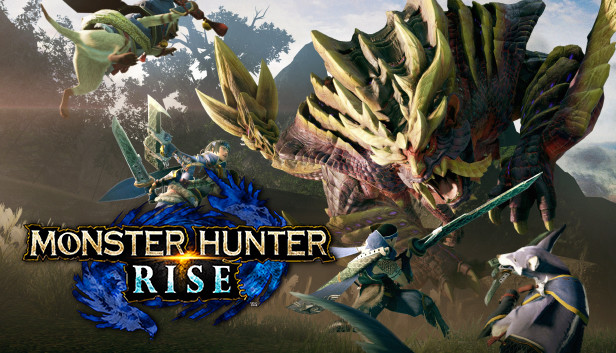
Monster Hunter Rise
Comfortable performance on specs a tier below World—and several tiers below Wilds.
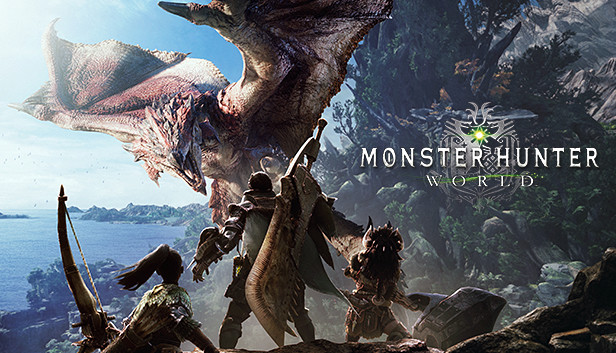
Monster Hunter: World
On a modern PC, World feels far smoother and sharper than it did at launch—and it remains a classic that’s still very playable even with budget used parts.
Specs: Official System Requirements
The number of ● dots quantifies the performance level required from PC components on a scale of 1 to 10.
Minimum
Recommended
Monster Hunter: World GPU Benchmark & FPS Guide
Target Mapping
Technical Evidence
GPU Benchmarks
CPU Benchmarks
This is a comparison graph of the manufacturer's minimum required specs, recommended specs, and bld4me-recommended parts (new and used). Higher values indicate smoother performance. bld4me's recommended parts are selected based on independent research, balancing comfortable gameplay with cost-performance for the game title.
GPU Matrix
How to Read GPU Matrix
| GPU | 720p | 1080p | 1440p | 4K |
|---|---|---|---|---|
bld4me NEW GeForce RTX 3050 6GB | ||||
Official Recommended GeForce GTX 1060 3GB | ||||
bld4me USED Radeon RX 5300 | ||||
Official Minimum GeForce GTX 760 2GB |
The FPS values above are estimated based purely on the GPU's native performance without any upscaler. These are merely estimates and do not guarantee actual performance.
Monster Hunter: World GPU Benchmark & FPS Database
Estimated FPS on this site is calculated based on the official recommended requirements of each game, assuming only the GPU is changed. Actual frame rates may vary depending on the environment, such as the combined CPU, memory, and storage.
Monster Hunter: World
184 SKUS| GPU | Share | 720PHD | 1080PFHD | 1440PQHD | 4KUHD |
|---|
Non-Recommended Models (Grade E)
Ranking Criteria Explained
The ultimate GPU. Delivers premium 4K gaming at max settings.
A step-up GPU for chasing high refresh rates and stunning visuals.
The smart pick—perfect balance of power and efficiency.
Ensures standard playability, delivering 30 to just under 60 FPS at 1080p/Medium settings.
The Game's Verdict: Recommended Specs & Grade
With more than five years since release, Monster Hunter: World has shifted from “you need an expensive gaming PC” to a game you can play comfortably with budget, used parts—because today’s mainstream hardware is far stronger than 2018-era baselines.
If the goal is to sharpen hunting skills and “get better,” a high-FPS setup helps, and World supports an uncapped framerate option (“No limit”) that can take advantage of 120Hz+ displays.
A key caveat is the sequel, Monster Hunter Wilds: compared to World, it raises both CPU/GPU demands and is explicitly designed around modern upscaling and frame generation for its recommended performance targets, so “fast enough” isn’t the only consideration—feature support on newer GPUs matters too.
If building a PC today, it’s usually best to commit to one of two directions: build with Wilds in mind (newer-generation, upscaler-capable parts), or go all-in on a low-cost World-class “Steam sale machine” and play as many great value titles as possible.