Calculating Value: Intel Core vs. Ryzen
First, using standalone CPU prices on Amazon (as of July 2020) and Geekbench benchmark scores, the cost per Geekbench point is calculated.
For Intel Core, consolidated data for 10th Gen wasn’t available, so this comparison uses the previous 9th Gen instead. Ryzen may look slightly favored in benchmark terms, but since Intel is from the prior generation, its pricing is typically more settled—so the impact on a “value for money” comparison should be limited.
(Prices converted using the July 2020 average exchange rate of $1 = ¥106.77.)
| CPU | Amazon price (Jul 2020) | Geekbench single-core | Geekbench multi-core | Cost per Geekbench point |
|---|---|---|---|---|
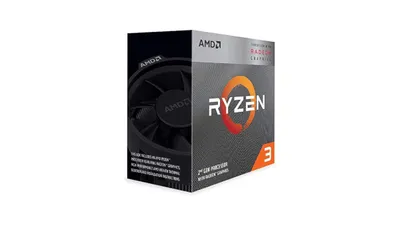
| AMD Ryzen 3 3100 | about $133 | 1116 | 4727 | about $0.03 |
| AMD Ryzen 5 3500 | about $163 | 1126 | 4816 | about $0.03 |
| AMD Ryzen 7 3700X | about $374 | 1254 | 8648 | about $0.04 |
| AMD Ryzen 9 3900X | about $570 | 1279 | 12044 | about $0.05 |
| Intel Core i3-9100 | about $129 | 1074 | 3289 | about $0.04 |
| Intel Core i5-9400 | about $187 | 1075 | 4659 | about $0.04 |
| Intel Core i7-9700 | about $359 | 1217 | 6641 | about $0.05 |
| Intel Core i9-9900 | about $549 | 1264 | 7878 | about $0.07 |
Ryzen offers better value across the lineup
Comparing the entry tiers (Ryzen 3 vs. Core i3), the cost per Geekbench point differs by roughly 1.5×, so in terms of pure CPU value, Ryzen comes out ahead.
In the mainstream tiers (Ryzen 5 vs. Core i5), the gap isn’t as large as in the entry tier, but Ryzen still tends to offer better value.
In the high-end tiers (Ryzen 7/Ryzen 9 vs. Core i7/Core i9), the difference can again reach roughly 1.5×, and Ryzen’s value remains strong even at the high end.
The key question for value: What about the graphics card?
A major difference is that (excluding the G-series), Ryzen CPUs typically don’t include an iGPU, while Intel Core CPUs do. That means Intel can avoid an extra graphics card cost in some builds, and once a graphics card is added, Ryzen may end up less cost-effective in certain cases.
If buying used, a basic graphics card can be found for around 2,000 yen (about $19). If strong graphics performance isn’t needed, buying a cheap used card once and reusing it can keep overall value high.
What about electricity costs?
With Ryzen, using a discrete graphics card increases power consumption, which tends to raise electricity costs.
Also, some CPUs such as the AMD Ryzen 9 3900X have a higher TDP (105W), so when factoring in electricity costs for the CPU itself, overall value can end up being roughly comparable in some scenarios.
Since electricity costs directly affect “cost per unit of work,” it’s important to check power consumption carefully when comparing CPUs.
Conclusion: Ryzen is more cost-effective as a CPU alone, but total value depends on the build
As shown in the table above, the Ryzen lineup offers excellent value as a CPU-only comparison.
However, once graphics card costs and electricity costs are included, overall value can become similar to Intel Core depending on the PC configuration and intended use. For that reason, it can’t be said that “Ryzen is always better value” in every total-system scenario.
For server use cases where CPU performance is the main priority, Ryzen is clearly strong value. Likewise, if a PC will include a discrete graphics card anyway, the presence of an iGPU doesn’t eliminate the need to buy a GPU, so Ryzen often remains the better value choice.
On the other hand, for everyday PCs that don’t need a graphics card, Intel Core CPUs with an iGPU can offer better overall value.
Having a real choice between Ryzen and Intel Core is a win for users—but it’s a decision that should be made based on the workload and requirements.